



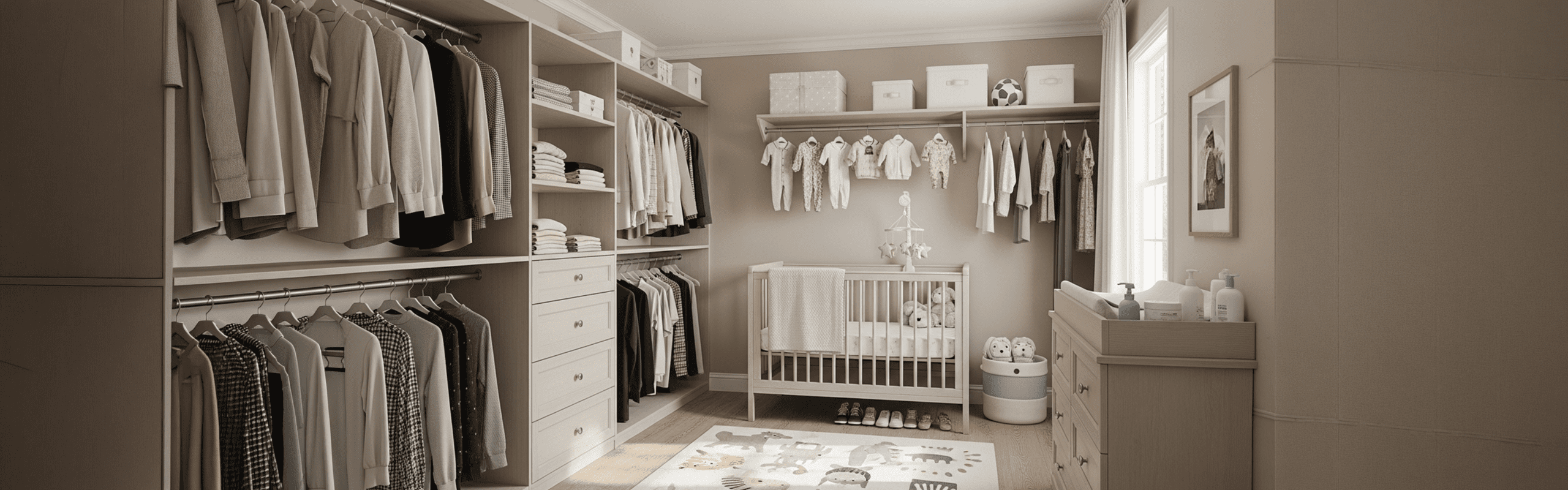
A home doesn’t need new walls to grow. Sometimes, it just needs a baby.
When a family welcomes a new child, the square meters don’t change but everything else does. The living room feels smaller. The bedroom feels fuller. Closets mysteriously shrink. Corners that once held décor now hold diapers, blankets, and tiny socks.
A baby doesn’t just join a home. The home adapts around them.
The Living Room Becomes a Life Room
Before the baby, the living room may have been designed for aesthetics. A clean coffee table. Decorative candles. Light-colored rugs.
After the baby arrives, the room becomes functional.
The coffee table shifts to make space for a play mat. Sharp edges get padded. Decorative objects move higher. A rocking chair quietly replaces a statement chair. Storage baskets appear almost overnight.
It’s no longer just a place to host guests. It becomes a place for tummy time, late-night soothing, and first smiles.
Homes evolve from looking good to working better.
The Bedroom Redefines Rest
Sleep changes when a baby enters the picture and so does the bedroom.
A crib fits beside the bed. A nightstand holds bottles instead of books. Soft lighting replaces harsh lamps. White noise becomes part of the atmosphere.
The master bedroom transforms into a shared command center for nighttime shifts.
And even if the baby has a separate nursery, parents often rearrange their own space first. Convenience becomes the priority. Comfort becomes practical.
Design follows life.
The Nursery: A Room Built on Hope
Whether it’s a full room or just a corner, creating space for a baby is one of the most emotional changes in a home.
Walls may be repainted. Storage units installed. Tiny wardrobes organized with surprising seriousness. Every shelf reflects anticipation.
But what makes a nursery meaningful isn’t its size or style. It’s the intention behind it. A safe corner. A calm environment. A place where routines begin.
The nursery is less about decoration and more about preparation.
Storage Becomes Strategy
Growing families don’t just need more space. They need smarter space.
Diapers. Wipes. Clothes in three different sizes. Toys that multiply faster than expected. Suddenly, organization matters more than ever.
Families start seeing their homes differently:
- That unused cabinet becomes essential storage.
- Under-bed space turns valuable.
- Vertical shelving becomes a solution.
Adapting to a baby often means rethinking how every meter is used.
It’s not always about moving to a bigger house. Sometimes, it’s about using the current one more intentionally.
Safety Changes the Layout
Before a baby, homes are arranged around convenience. After a baby, they’re arranged around safety.
Furniture gets secured to walls. Cleaning supplies move higher. Balcony locks become priorities. Electrical outlets get covered.
The house doesn’t just look different. It feels different.
It becomes softer. Slower. More aware.
A growing family reshapes the physical space but also the mindset within it.
Shared Spaces Become Shared Moments
As families grow, homes begin to hold more than furniture. They hold routines.
Feeding time in the kitchen. Story time on the couch. Bath time rituals. Morning chaos. Evening calm.
Spaces once used individually become shared more intentionally. The dining table becomes less about meals and more about gathering. The hallway becomes a first-step runway. The couch becomes a place for cuddles.
Homes expand emotionally before they expand physically.
When the Space No Longer Fits
Sometimes, adaptation reaches its limit.
The crib no longer fits comfortably. Storage feels impossible. Privacy becomes rare. The second child arrives. Remote work overlaps with parenting.
That’s when families begin asking a new question: Is this home still right for us?
Upgrading to a larger space, moving closer to support systems, or choosing a layout that better fits daily routines becomes less about luxury and more about functionality.
Growing families don’t just look for bigger homes. They look for smarter layouts, safer neighborhoods, nearby schools, and flexible rooms that can evolve again.
Because babies don’t stay babies.
A Home That Grows With You
The most important thing about a home isn’t how it looks on day one. It’s how well it adapts over time.
A flexible layout. Extra storage. A small room that can later become a study. A balcony that becomes a play area. A guest room that turns into a nursery.
When families search for property, they’re not just choosing where to live today. They’re choosing where life can unfold tomorrow.
Platforms like dubizzle make this process easier by offering access to diverse property listings that suit different family sizes, budgets, and future plans. Whether you’re preparing for your first baby or realizing you need more room for your growing household, exploring available options helps you find a space that supports the next chapter.
Conclusion
When a baby arrives, the walls don’t move but priorities do.
Homes become safer. Softer. More practical. More alive.
A growing family doesn’t just fill a house with more things. It fills it with more meaning.And the best homes aren’t the ones that stay the same.
They’re the ones that grow with you.


